Skip the prep with 61 printable mindfulness activities for classrooms & counseling

The Best Self Help Books, Sorted by What You Actually Need Right Now
This post contains affiliate links. If you click and make a purchase, we may earn a small commission at no extra cost to you.
There is a stack of books on my nightstand that I bought to become a calmer person, and the stack is now a mild source of stress.
Some are half-read. One has a receipt marking page 41, which is about where I was when life happened. One I’m fairly sure I bought twice.
After years of buying the best self help books, I’ve learned that reading about change is much easier than doing it. Underlining feels like progress. Mostly it’s reading.
So this isn’t a ranking. The top rated self help books aren’t the best ones for you if they’re the wrong book for this particular week.
If you’re exhausted, a book about building better systems will feel like homework. If you’re stuck, a book about rest will feel like permission you didn’t ask for.
What follows is 30 self help and personal development books, sorted by what you might need right now. Each one comes with a small practice you can try today, in under five minutes, before you buy anything. You don’t have to read a single page to get something out of this list.
Table of Contents
The 5 Best Self Help Books to Start With
These are the all-rounders. They’re the ones I recommend when someone says “I want to read something good” and I don’t know anything else about their week.
1. Atomic Habits by James Clear
Best for: Changing a habit when your willpower has clocked out for the day.
What stuck with me: Clear’s argument is that systems beat goals. A goal tells you where you want to end up, and a system decides what you actually do on a Tuesday. Habit stacking is the part I still use: you attach a new habit to one you already have.
One honest note: if you’re running on fumes, this book can feel like a spreadsheet for your soul. In that case, skip ahead to the self-care section and come back later.
Try this today: Pick something you already do without thinking and attach one tiny thing to it. “After I pour my coffee, I take three slow breaths.”

2. The Gifts of Imperfection by Brene Brown
Best for: Perfectionists, people-pleasers, and anyone who has rehearsed a casual text four times.
What stuck with me: Brown draws a line between fitting in and belonging. Fitting in means changing yourself to be accepted. Belonging means being accepted as you are.
I read that and thought about every party where I’d become a slightly shinier, slightly louder version of myself. It’s a short book with short chapters, and the kind you pick up again years later and underline different sentences.
Try this today: Notice one moment today when you edited yourself to fit in. Don’t fix it. Just catch it.
3. Man’s Search for Meaning by Viktor E. Frankl
Best for: Hard seasons, when “think positive” sounds like an insult.
What stuck with me: The first half is Frankl’s account of surviving the Nazi concentration camps. The second half explains the therapy he built afterward, which centers on finding meaning. It’s not a comfortable read, and it shouldn’t be.
What surprised me was his point that suffering fills the whole of a person, whatever its size. So your hard week isn’t diminished by comparison, and the book doesn’t want you to feel guilty for struggling with something smaller.
Try this today: Write one sentence about what today’s hard thing might be for. It doesn’t need to be noble or tidy. Any answer counts.

4. The Untethered Soul by Michael A. Singer
Best for: Overthinkers, ruminators, and people whose inner narrator never takes a lunch break.
What stuck with me: Singer’s core idea is that you are not the voice in your head. You are the one hearing it. The first time that landed for me, I felt a small, strange gap open between me and my own commentary, and the gap was roomy.
Honestly, the later chapters get more cosmic than I needed, and I drifted. The first third of the book is the part that matters.
Try this today: The next time the inner narrator starts up, say to yourself, “There’s the voice.” Then just watch what it does next.

5. Four Thousand Weeks by Oliver Burkeman
Best for: Anyone waiting to finally get on top of everything before life can begin.
What stuck with me: The title is roughly how many weeks you get if you live to 80. It may be the most relaxing book ever written about death.
Burkeman’s argument is that you will never clear the inbox, finish the list, or reach the calm plateau where you’re on top of it all. Once you accept that, you can choose what to neglect on purpose instead of by accident. This one reorganized how I think about my to-do list more than any productivity book has.
Try this today: Pick one thing you will consciously not do this week. Write it down. Neglect it with intention.

Best Self Help Books for Being More Present
This section is the heart of it for me. Presence doesn’t mean calm. It means being here for whatever is actually happening, including the dishes and the bad mood.
If any of these click, our one-minute meditations are a good next step.
6. Wherever You Go, There You Are by Jon Kabat-Zinn
Best for: A gentle first mindfulness book that doesn’t ask you to buy a cushion.
What stuck with me: Kabat-Zinn founded Mindfulness-Based Stress Reduction, and this book reads like a series of short, kind nudges rather than a course. The title was the lesson for me.
You can’t escape yourself by going on vacation, because you come along. That sounds bleak, and it turns out to be a relief. You can open it anywhere and read three pages.
Try this today: Brush your teeth with full attention: the taste, the sound, the slightly ridiculous foam. You’ll notice your mind wander off about four times in two minutes. Noticing that is the practice.

7. 10% Happier by Dan Harris
Best for: Skeptics, and anyone who rolls their eyes at the word “mindfulness.”
What stuck with me: Harris was a TV news anchor who had a panic attack on live television, and this book is his reluctant, funny, very un-mystical account of trying meditation afterward. What I loved is the number in the title. He doesn’t promise bliss or enlightenment.
He promises 10 percent, which is the most trustworthy claim in the whole genre. It reads like a journalist’s book, not a poet’s. Readers looking for something lyrical should go elsewhere.
Try this today: Sit for five minutes with your breath. When your mind wanders, bring it back without scoring yourself. Nobody is keeping track.

8. The Miracle of Mindfulness by Thich Nhat Hanh
Best for: Short, calm reading on a day when your brain can’t handle long chapters.
What stuck with me: Thich Nhat Hanh wrote this originally as a letter, and it still feels like one. The famous passage is about washing the dishes to wash the dishes, not to get them done so you can have tea.
If you rush the dishes to get to the tea, you’ll drink the tea thinking about the next thing. This book changed my relationship with my sink, which is not something I expected to say as an adult.
Try this today: Wash the dishes just to wash the dishes. Warm water, the weight of the plate. Let the tea wait.

9. Radical Acceptance by Tara Brach
Best for: Women with a harsh inner critic who sounds suspiciously like a disappointed relative.
What stuck with me: Brach names something she calls the trance of unworthiness: the background belief that something is fundamentally wrong with you. Just having a name for it helped. When the feeling shows up now, I can sometimes recognize it as weather rather than truth.
The book is long, and in places slow. I read it a chapter at a time, usually on bad days, and that’s how it works best.
Try this today: When an uncomfortable feeling shows up, say a quiet “yes, this is here.” You aren’t approving of it. You’re just admitting it’s here.

Best Books for Finding Yourself
Most books about the self assume there’s a finished version of you hidden somewhere, waiting to be found like a lost earring. I’m not sure that’s how it works. These four are less about finding and more about noticing who has been here all along, underneath everyone else’s expectations.
If you want to keep digging, our mindfulness journal prompts pair well with all of them.
10. Untamed by Glennon Doyle
Best for: Women who’ve spent years living by a script they didn’t write.
What stuck with me: The book opens with a story about a captive cheetah who performs for a treat while some wild part of her remembers what she really is. I put the book down after that chapter and stared at the wall for a while.
It’s loud, it’s very much Glennon, and some readers find it too much. If you’re in a season of questioning everything, though, it lands hard and stays.
Try this today: Before one decision today, even a small one, pause and ask: What do I actually want here? Then notice how long it takes to hear an answer.

11. The Four Agreements by don Miguel Ruiz
Best for: A quick, readable reset you can finish in an evening.
What stuck with me: The four agreements are:
- Be impeccable with your word.
- Don’t take anything personally.
- Don’t make assumptions.
- Always do your best.
The second one gets all the attention, and rightly so: most of what other people say and do is about their world, not yours. But the fourth one quietly saved me.
Your best changes from day to day, and your best while sick or grieving is still your best. The framing is grand in places, so just take what’s useful.
Try this today: Catch yourself taking one comment personally. Then try, just for a moment, to see it as information about the other person.

12. Quiet by Susan Cain
Best for: Introverts who have been told, kindly and repeatedly, to speak up more.
What stuck with me: Cain makes the case that introversion isn’t shyness or a flaw. It’s a different way of taking in the world, and one our loud culture tends to undervalue. The idea I kept is the “restorative niche”: the place or time where you go to recharge after being “on.”
Knowing I needed one, and that needing one was normal, changed how I plan a busy week. Hiding in the bathroom at a party counts. I’ve checked.
Try this today: Protect 20 minutes of real alone time. That means no phone, and no “alone but answering messages.”

13. The Artist’s Way by Julia Cameron
Best for: Creative people who feel blocked, and people who don’t think of themselves as creative at all.
What stuck with me: I didn’t finish the 12-week program. I made it to week four, which I suspect is where a lot of us quietly bail. But the morning pages stuck: three pages of longhand, first thing, about anything.
They’re not meant to be good. They work like a drain for the mental sludge. Cameron’s framing is fairly spiritual, so if that’s not your thing, take the practice and leave the rest.
Try this today: Tomorrow morning, before your phone, write three pages longhand without stopping and without rereading. Then close the notebook.

Best Self-Care Books (for Taking Care of Yourself)
Self-care has been sold to us as a bath bomb. These are better books on taking care of yourself: the unglamorous, practical kind of self-care, for when you need to get through a week, not decorate it. Our mindfulness activities for adults post has more small ideas in the same spirit.
14. Self-Compassion by Kristin Neff
Best for: Being kinder to yourself, especially if you suspect kindness will make you lazy.
What stuck with me: Neff is a researcher, and the book walks through three pieces of self-compassion:
- Kindness toward yourself
- Remembering that everyone struggles
- Noticing your pain without drowning in it
The part that convinced me is her case that self-compassion isn’t self-pity or letting yourself off the hook. People who treat themselves kindly after a mistake tend to try again, rather than hide. The exercises feel ridiculous at first, and they work anyway.
Try this today: Put a hand on your heart and speak to yourself the way you would to a friend having this exact day. Out loud, if you’re brave.

15. Burnout by Emily Nagoski and Amelia Nagoski
Best for: Running on empty and wondering why rest doesn’t seem to help.
What stuck with me: The Nagoski sisters separate the stressor (the deadline, the difficult person) from the stress itself, which lives in your body. Dealing with one doesn’t automatically deal with the other.
Your body needs to finish the stress cycle, through things like movement, crying, laughing, or a long hug. This explained so much about why I could finish the stressful project and still feel braced for impact.
Try this today: Complete the stress cycle: 20 minutes of movement, or a 20-second hug. Count the hug. You’ll want to stop at seven.

16. How to Keep House While Drowning by KC Davis
Best for: Days, or seasons, when ordinary tasks feel impossible.
What stuck with me: Davis’s central idea is that care tasks are morally neutral. A messy kitchen isn’t a character flaw. Laundry is not a referendum on your worth.
I didn’t realize how much shame I’d attached to an unloaded dishwasher until I read that. The book is short, gentle, and designed for people who don’t have the energy to read a long book about having no energy.
Try this today: Do a five-things tidy of one room, in this order:
- Trash
- Dishes
- Laundry
- Things that have a place
- Things that don’t
Stop when you’re done with those five.

17. Rest Is Resistance by Tricia Hersey
Best for: People who feel guilty resting, or who only rest once they’ve “earned” it.
What stuck with me: Hersey founded The Nap Ministry, and this book is a manifesto more than a manual. It’s direct about where she believes grind culture comes from and who it harms.
The thing I took away is that rest isn’t a reward for productivity, and it doesn’t need a reason. If you want tips, this isn’t the book. If you want permission, it is.
Try this today: Take 10 minutes to nap, lie down, or daydream. Don’t justify it to anyone, including yourself.

Books on Taking Action (When You’re Stuck)
Every book on taking action has the same design flaw: you can read it instead of taking action. I know because I have. So for this section especially, try the practice first and read later.
18. The Mountain Is You by Brianna Wiest
Best for: Self-sabotage, and noticing the pattern again and wondering why.
What stuck with me: Wiest argues that self-sabotage usually isn’t a lack of willpower. It’s a way of meeting a need you haven’t admitted to, like safety, comfort, or not having to find out whether you’d fail.
That reframe made me curious about my own patterns instead of furious at them. The book repeats itself in places, so skim where it circles and slow down where it stings.
Try this today: Name one way you hold yourself back. Then ask what it’s protecting you from.

19. Tiny Habits by BJ Fogg
Best for: All-or-nothing thinkers, and people who start every January with a 14-point plan.
What stuck with me: Fogg is a behavior researcher, and his method is to make a new habit so small it’s almost silly. His best-known example is flossing one tooth. Then you celebrate right away, because feeling good is what makes a habit stick.
The celebration part felt absurd until I tried it. I now do a tiny victory nod after taking my vitamins, and I’ve never been more consistent with anything.
Try this today: Do one habit so small it’s laughable, then celebrate it immediately with a nod, a “nice,” or a small fist pump in the kitchen.

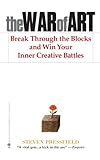
20. The War of Art by Steven Pressfield
Best for: Procrastinators, especially creative ones.
What stuck with me: Pressfield gives the force that keeps you from your work a name, Resistance, and treats it like an opponent. Something about giving it a name made it less personal. It’s not that I’m lazy; Resistance showed up, as it does.
The tone is brisk and a bit macho, and the later sections get mystical. The first part is worth the price.
Try this today: Give the thing you’ve been avoiding 15 minutes. Set a timer, and stop when it rings if you want to.
21. Big Magic by Elizabeth Gilbert
Best for: Fear of starting, and the belief that you’re not “the creative type.”
What stuck with me: Gilbert’s image of fear as a passenger on a road trip is the one I return to. Fear is allowed in the car and is allowed to talk, but it doesn’t get to drive, and it doesn’t get to pick the music.
That’s far more realistic than being told to be fearless. This is a warm, generous book that makes making things feel like play again.
Try this today: Make something small, like a sketch, a paragraph, or a weird sandwich, with no plan to show anyone.

Books That Are Good for the Soul
Some days don’t call for a system or a plan. They call for comfort, perspective, or a good cry in a safe place. These are my favorite books that are good for the soul, the mind, body and soul books I reach for when everything feels heavy.
22. The Book of Awakening by Mark Nepo
Best for: Short reads on a hard day, when you can manage about one page.
What stuck with me: Nepo is a poet who wrote this after surviving cancer, and it’s arranged as 365 short daily readings, one for each day of the year. Each entry ends with a small practice, which is probably why I trusted it.
Some entries are more poetic than I need. I don’t read it in order. I open it to today’s date, and more often than not, it’s the right page.
Try this today: Open to today’s date and read that single entry. Then do the practice at the end, even if it seems too simple.

23. When Things Fall Apart by Pema Chodron
Best for: Grief, upheaval, and the moments when the ground disappears.
What stuck with me: Chodron is a Buddhist nun, and her central teaching is about groundlessness. Things fall apart, and that isn’t a sign you did life wrong. Instead of rushing to rebuild solid ground, you can learn to sit in the not-knowing.
I read this the year everything shifted for me, and it was the only book that didn’t try to cheer me up. That was what I needed.
Try this today: Stay with one uncomfortable feeling for three breaths without fixing it, explaining it, or reaching for your phone.

24. Tiny Beautiful Things by Cheryl Strayed
Best for: Feeling seen when you didn’t know you needed to be.
What stuck with me: This is a collection of Strayed’s advice columns from when she wrote anonymously as “Sugar.” Strangers sent in letters about grief, love, money, and shame, and she answered with startling honesty and tenderness.
You’ll find your own problem in someone else’s letter. You’ll also cry somewhere inconvenient. Mine was a dentist’s waiting room.
Try this today: Write the letter you’d want to send to an advice column. Then answer it the way a wise friend would.

25. Gift from the Sea by Anne Morrow Lindbergh
Best for: Overstretched women who need room to breathe.
What stuck with me: Lindbergh wrote this short book in the 1950s during a stretch alone at the beach, and most chapters are built around a different shell. Her subject is how a woman’s life gets pulled in too many directions, and how solitude and simplicity pull it back together.
Some of it is dated, and you’ll notice. But her point that you have to protect time alone, because nobody will hand it to you, reads like it was written last week.
Try this today: Spend 10 minutes alone with no phone, no book, and no input. Then clear one small surface at home and leave only one thing you love on it.

Motivational Novels That Work Like Self-Help
Some people hate self-help books and love stories. That’s allowed.
A good novel can change your thinking more quietly than any list of tips, mostly because it doesn’t announce that it’s trying to. Here’s my pick for the best motivational novel in three different moods.
26. The Alchemist by Paulo Coelho
Best for: Dreamers who’ve gone quiet about their dreams.
What stuck with me: A shepherd boy goes looking for treasure and learns a great deal along the way. It’s divisive. Some people find it profound, and others find it a fortune cookie stretched into a novel.
Both camps have a point. What stayed with me is where the story ends up, which I won’t spoil, and the reminder that the search changes you whether or not you find the thing.
Try this today: Write down one wish you’ve stopped saying out loud.

27. The Midnight Library by Matt Haig
Best for: Regret spirals and “what if I’d chosen differently” nights.
What stuck with me: Nora Seed finds herself in a library where every book is a version of the life she could have lived. A gentle note: the story begins with a suicide attempt, so take care if that’s close to home for you.
What it does beautifully is show that the life you didn’t choose wouldn’t have been free of disappointment either. It just would have had different ones. I closed it feeling more fond of my actual, unremarkable life.
Try this today: List one regret. Then list one thing in your real life you’d miss if you’d taken the other path.

28. Eleanor Oliphant Is Completely Fine by Gail Honeyman
Best for: Loneliness, especially the kind you’ve gotten very good at hiding.
What stuck with me: Eleanor has her routines, her frozen pizza, and her weekend vodka, and she is, as the title insists, completely fine. She isn’t, and the book is funnier and sadder than you expect.
It deals with childhood trauma, so be aware of that going in. What I loved is how it shows ordinary kindness, like a coworker who keeps showing up, doing more than any grand gesture could.
Try this today: Say yes to one small invitation you’d normally decline. Coffee counts.

Best Self Help Books for Happiness
Two books for the curious and the experimental. Neither promises you’ll arrive at happy. Both make the question more interesting.
Our post on the happiness set point goes deeper if you want more.
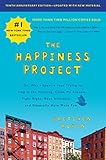
29. The Happiness Project by Gretchen Rubin
Best for: Practical experimenters who like a plan and a chart.
What stuck with me: Rubin spends a year testing happiness research on her own life, one theme per month. Her year is very structured and fairly comfortable, and some readers find that grating. My advice is to borrow her method and leave her life alone.
The best idea in the book is writing personal commandments. Hers include “Be Gretchen,” a reminder to stop trying to enjoy things she thinks she should enjoy.
Try this today: Write one personal commandment. Mine is “Leave the party when you want to leave the party.”
30. Stumbling on Happiness by Daniel Gilbert
Best for: Curious minds who’d rather understand happiness than chase it.
What stuck with me: Gilbert is a psychologist, and his central finding is humbling. We’re bad at predicting what will make us happy. We imagine the future using the present, and we get it wrong in consistent ways.
His fix is surprisingly practical: ask someone who’s already living the thing you’re imagining how it actually feels. That turns out to be a better guide than your imagination. It’s funny, smart, and slightly deflating, in a good way.
Try this today: Before your next big choice, ask someone who’s already made it how it actually felt, not how they expected it to feel.

How to Actually Get Something Out of a Self Help Book
The nightstand stack taught me this the hard way. Here’s what works for me, after years of doing it wrong.
Read one chapter, then try one thing. Don’t finish the book first. A chapter is plenty.
The insight that changes your week is rarely on page 280. It’s usually the one idea you tried the next morning. Reading the whole book before trying anything is how you end up with lots of underlining and the same habits.
Keep your notes in one place. It doesn’t matter whether that’s a notebook or the back of a receipt, as long as it’s the same one every time.
When everything lives in one place, you start seeing patterns: the same struggle showing up in five different books, or the same kind of practice that keeps working for you. That’s more useful than any single book.
Reread the one that helped instead of buying a new one. This is the advice I least want to follow. A new book feels like progress, while rereading feels like admitting you didn’t get it the first time.
But you’re a different person on the second read, and you’ll underline different sentences. The book that helped once almost always has more to give.
Frequently Asked Questions
What is the number one self help book?
Honestly, it depends on what you need right now. The most common answer on lists of top rated self help books is Atomic Habits by James Clear, and it earns that spot for anyone trying to change a habit. If you’re exhausted, grieving, or just want to feel less alone, a different book will serve you better, so start with the quick picker above.
What are good books for the soul?
My favorite mind body and spirit books for hard days are When Things Fall Apart by Pema Chödrön, Tiny Beautiful Things by Cheryl Strayed, The Book of Joy, and the classic Chicken Soup for the Soul. They don’t try to fix you. They keep you company, which is sometimes the more useful thing.
Do self help books actually work?
Sometimes, and mostly when you do something with them. A book can give you language, a new frame, or one practice that sticks, and that’s real value. But reading about change isn’t change, and no book is a substitute for therapy or medical care if you’re dealing with depression, anxiety, or trauma. Think of them as companions, not treatment.
What book should I read to find myself?
If you feel like you’ve been living by other people’s expectations, start with Untamed by Glennon Doyle. If you’re creatively blocked, try The Artist’s Way by Julia Cameron, and if you’re an introvert who’s been performing extroversion, read Quiet by Susan Cain. You probably aren’t lost, just a bit buried, and these help you dig.
No book will finally fix you. You were never broken, just busy, tired, distracted, and human, like the rest of us.
So here’s what I’d suggest. Pick one book from this list, the one that made you nod or flinch.
Try its practice today, before you’ve even bought it. Then notice what happens.
A good book doesn’t take you somewhere new. It brings you back to where you already are, a little more awake.
The content shared here is for informational purposes only and is not a substitute for professional medical or mental health advice.