Skip the prep with 61 printable mindfulness activities for classrooms & counseling

59 Gratitude Mantras for Morning, Hard Days, and Every Moment in Between

This post contains affiliate links. If you click and make a purchase, we may earn a small commission at no extra cost to you.
Most people try gratitude mantras the way they try a lot of wellness practices: dutifully, briefly, and without much expectation. They repeat the words. They feel nothing. They conclude they are the kind of person gratitude mantras don’t work on and move on with their day.
Here is what’s actually happening: the mantra isn’t the problem. The absence is.
A gratitude mantra is a short phrase — sometimes a single line — used as an anchor during meditation, breathwork, or the deliberately slow part of a morning. You repeat it. Not to convince yourself of anything, and not because the universe is listening, but because repetition with attention is how the mind learns to go somewhere it doesn’t naturally go on its own. The words aren’t magic. The showing up is.
That’s worth distinguishing from affirmations, which often get conflated with mantras but work differently. Gratitude affirmations are statements you make to yourself — declarative, personal, sometimes aspirational: I am enough. I have what I need. A mantra is more like a rhythm than a sentence. It’s shorter, more compressed, and designed to be returned to rather than believed outright. You don’t have to feel it for it to be useful. You just have to be there when you say it.
The research on gratitude is genuinely robust, which is not something you can say about most wellness topics. Studies consistently find that regular gratitude practice is associated with lower rates of depression and anxiety, better sleep, and — perhaps most surprisingly — measurable changes in how the brain responds to difficulty over time. This doesn’t mean a gratitude mantra will fix a hard week. It means that the practice of consciously returning to what is present and good, even briefly, even imperfectly, changes something.
In practical terms, there are three ways to use the gratitude mantras below. You can say one aloud before you get up in the morning — just one, before the phone, before the list — and let it sit for a breath or two. You can repeat one silently on each exhale during a seated meditation, using it the way you’d use the breath itself: as something to come back to. Or you can write one at the top of a journal page and respond to it, letting the phrase open something rather than close it. For a more structured practice, a guided meditation for gratitude can help you settle into that space before working with a mantra.
Pick whatever fits your day. Not your ideal practice — your actual one. Here are 59 gratitude mantras, organized by what you’re trying to cultivate.
Table of Contents
Morning Gratitude Mantras
The morning is useful for gratitude practice not because it sets the tone for your day — that’s a slightly optimistic reading of how mornings work — but because it’s the one moment before the day gets loud. A mantra said in the first two minutes, before you’ve checked anything, has a different quality than one said later. These are written for that window: short enough to say before coffee, open enough to actually mean something.
- As I open my eyes each morning, I feel a sense of gratitude.
- Each day I’m able to wake up is a blessing.
- Each day is a unique gift.
- Today, I’m grateful to be alive.
- Each day, I move further into a state of gratitude.
- I resolve to approach the day with lightness and playfulness.
- I’m grateful for the mere fact of existing.
- I commit to noticing the beauty of nature each day.
- I’m grateful for sunrises and sunsets.
- As I breathe in, I’m breathing more gratitude into my life.

Gratitude Mantras for Hard Days
These are not toxic positivity in mantra form. They are not asking you to feel grateful for the hard thing. They’re asking you to find the small true thing that coexists with it — because it almost always does, even when the hard thing is very hard. Use these when you need an anchor, not an escape. They work best when you’re not pretending the day is fine.
- I strive to live each moment with appreciation, including those that are hard.
- I’m grateful for the obstacles in life. They’re a chance to strengthen my resilience.
- Every experience in the past made me who I am today. I am grateful for all of them.
- I know that everything that’s happening in my life will lead me where I need to go.
- With each experience I have, I’m grateful for the lessons I learn along the way.
- Today, I did the best I could. I’m grateful for the effort I was able to give.
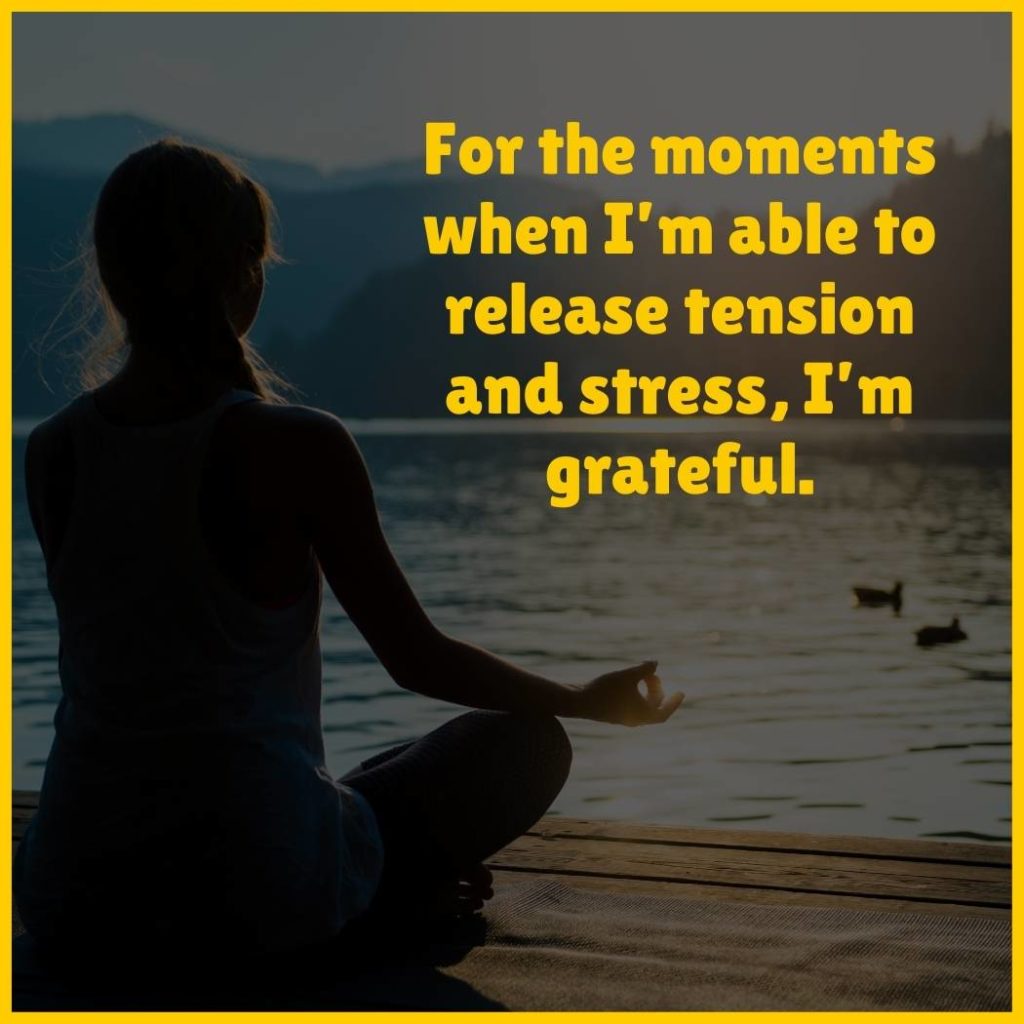
- For the moments when I’m able to release tension and stress, I’m grateful.
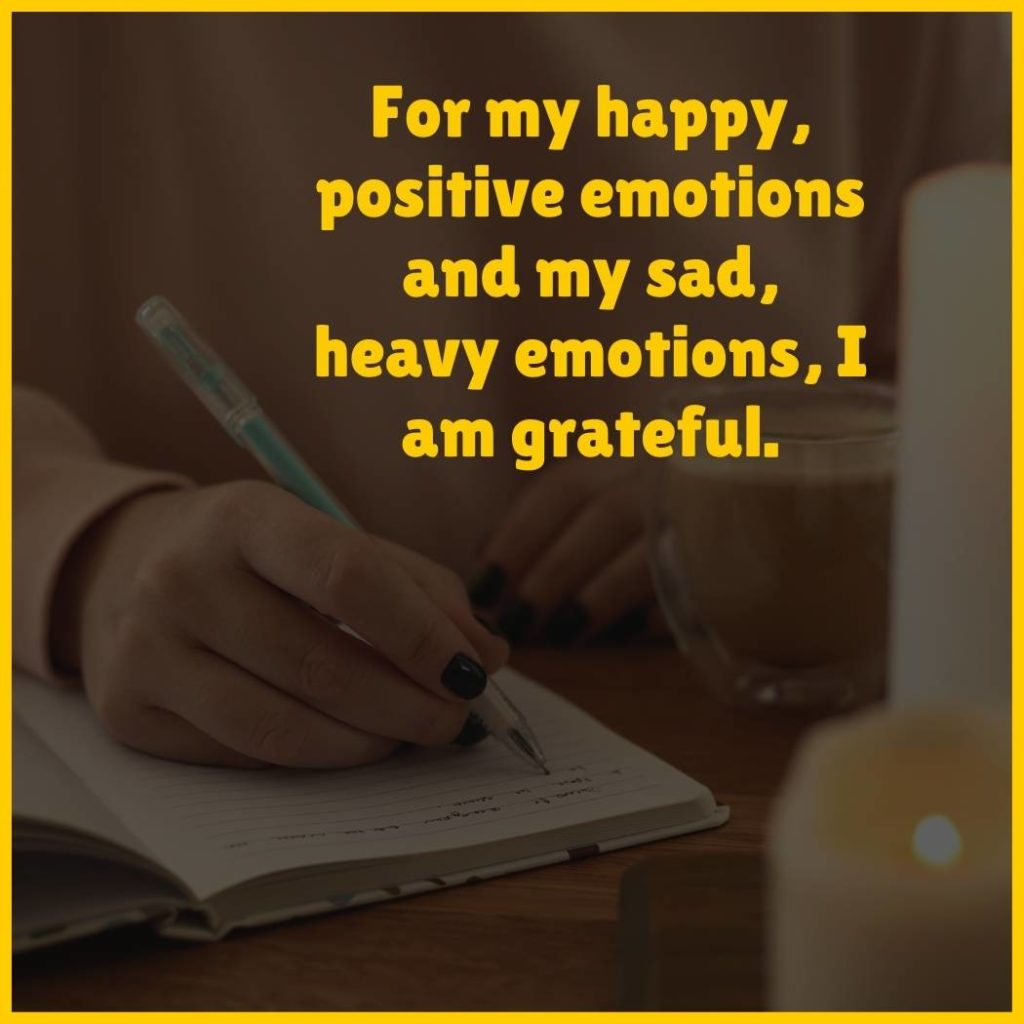
- For my happy, positive emotions and my sad, heavy emotions, I am grateful.
- Although I’m working towards the life of my dreams, I’m grateful for what I have now.
- Gratitude helps me focus on what could go right, instead of what could go wrong.
- For those “aha!” moments that have led me to make changes in my life, I am grateful.
- I trust that when I do something kind, it comes back to me.
- I know I already have enough.
Gratitude Mantras for Self-Compassion
Gratitude turned inward is harder than gratitude turned outward. It’s easy to appreciate a sunset. It is significantly harder to appreciate yourself on a Thursday when you’ve dropped three balls and eaten lunch standing over the sink. These mantras are for that. They’re not compliments — they’re just quiet reminders that you are also worth being present with. If you want to go deeper with this kind of inward work, self-compassion exercises pair naturally with a regular mantra practice.
- I am grateful for the opportunity to love myself and show compassion to myself.
- I’m grateful for the ability to forgive myself.
- I’m grateful for the ability to show compassion to myself.
- I’m grateful for the unique value I bring to the world just by existing.
- Everything I am, and everything I have, is already enough.
- I am grateful for the endless opportunities I have to grow.
- For the gift of creativity, I am grateful.
- I’m grateful for the chance to grow into the best version of myself.
- Life is a constant chance to learn and grow. I’m grateful to be a lifelong learner.
- My attitude is changing from one of constriction to one of abundance.
Gratitude Mantras for Relationships
The people who are simply and reliably there — not dramatically, not perfectly, just there — are often the ones we forget to notice. These mantras are for them. For the ordinary gratitude that doesn’t make it into the big moments: the person who answered, the one who remembered, the relationship that quietly holds.
- I’m grateful for the support I receive from those who care about me.
- For all the love and support shown to me by my partner — I am grateful.
- I am grateful to love, and I am grateful to be loved.
- For each moment of kindness shown to me by others — I am grateful.
- When I cultivate gratitude and happiness, I not only have an impact on myself, but on those around me.
- I’m grateful for the chance to give to others.
- I’m grateful for the chance to have an impact on others.
- I’m grateful for having my voice heard and for the ability to express my thoughts.
- Today’s technologies allow me to keep in touch with friends and family in different cities and countries. I’m grateful for the chance to keep my relationships strong from afar.
- I’m grateful for animals and children, who remind us to be playful and joyful.
- I walk the Earth in appreciation for every living thing on the planet.
Short Gratitude Mantras
One line. Sometimes that’s all you need, and sometimes that’s all you have. These are the ones that fit on a single exhale — short enough to use anywhere, compact enough to actually stick. If you’re going to memorize one, start here. You might also find it useful to write one at the top of your page before a mindfulness journaling session and let it open something.
- I choose to look at the world through the lens of gratitude.
- I am happy for everything I have.
- I’m grateful for each sip of water and each breath of air.
- For food, water, and shelter, I am grateful.
- Each day is a unique gift.
- I’m grateful to my body, for being my home.
- The more I express gratitude, the more I see the world through the lens of gratitude.
- For every laugh, smile, and moment of joy in my life — I am grateful.
- For every meal I eat, I am grateful for the farmers, workers, and drivers who got the food to me.
- I’m grateful for every sigh of contentment and moment of peace in my life.
- I’m grateful for every feeling of surprise, of pride, and of tenderness I’ve felt.
- For the chance to dream of a better future — I am grateful.
- I recognize that happiness is within me, and that gratitude is the basis for happiness.
- I’m committed to a life focused on joy and appreciation for what I have.
- For moments of energy, inspiration, and motivation — I am grateful.


Frequently Asked Questions About Gratitude Mantras
What are gratitude mantras?
A gratitude mantra is a short phrase used as a mental anchor — something you return to repeatedly during meditation, breathwork, or a quiet moment in the day. The word mantra comes from Sanskrit: man, meaning mind, and tra, meaning tool or instrument. A gratitude mantra, then, is a tool for directing the mind toward what is present and good — not through forced positivity, but through deliberate, repeated attention. They work because the mind follows what it practices: returning to a phrase of gratitude consistently, even briefly, gradually shifts the direction the mind moves in by default.
How do I use gratitude mantras?
There are three approaches, depending on what you’re working with. In meditation: choose one mantra and repeat it silently on each exhale. When your attention drifts — and it will — come back to the phrase. As a morning anchor: before you check your phone, say one mantra aloud. Once. Let it sit for a breath or two. The whole practice is under a minute. As a journaling prompt: write the mantra at the top of a blank page and respond to it. Don’t explain it or agree with it — just let it open something. What does it bring up? What does it remind you of?
What’s the difference between a gratitude mantra and an affirmation?
An affirmation is a declarative statement directed at yourself — I am enough. I am capable. The intention is to replace a negative belief with a positive one through repetition and conviction. A mantra is less about belief and more about attention. It’s typically shorter, less personal, and designed to be used as a focal point rather than a statement. You don’t have to believe a gratitude mantra for it to be useful — you just have to keep returning to it. In practice: affirmations tell you something about yourself. Mantras give the mind somewhere to rest.
What is the Sanskrit word for gratitude?
The closest Sanskrit word for gratitude is kritajna — literally, “one who knows what has been done.” Krita means done or accomplished; jna means to know. Together, they describe someone who is genuinely conscious of what they have received. It’s a useful etymology because it reframes the whole thing: gratitude in this tradition isn’t primarily a feeling. It’s a quality of attention — the capacity to notice what is already here. Another Sanskrit term worth knowing is santosha — contentment, or the practice of being satisfied with what is present. Many traditional gratitude mantras draw from both concepts.
How long does it take for gratitude mantras to work?
There’s no fixed timeline, and that framing can actually get in the way. The more useful question is whether you’re returning to the practice consistently — even for a minute, even imperfectly. Research on gratitude suggests that noticing shifts in mood, perspective, and stress response tends to happen over weeks rather than days of regular practice. The mantras work not because of any single repetition but because of the accumulated effect of repeatedly directing attention toward what is good. Start small. The bar for “working” is lower than you think.
The content shared here is for informational purposes only and is not a substitute for professional medical or mental health advice.